
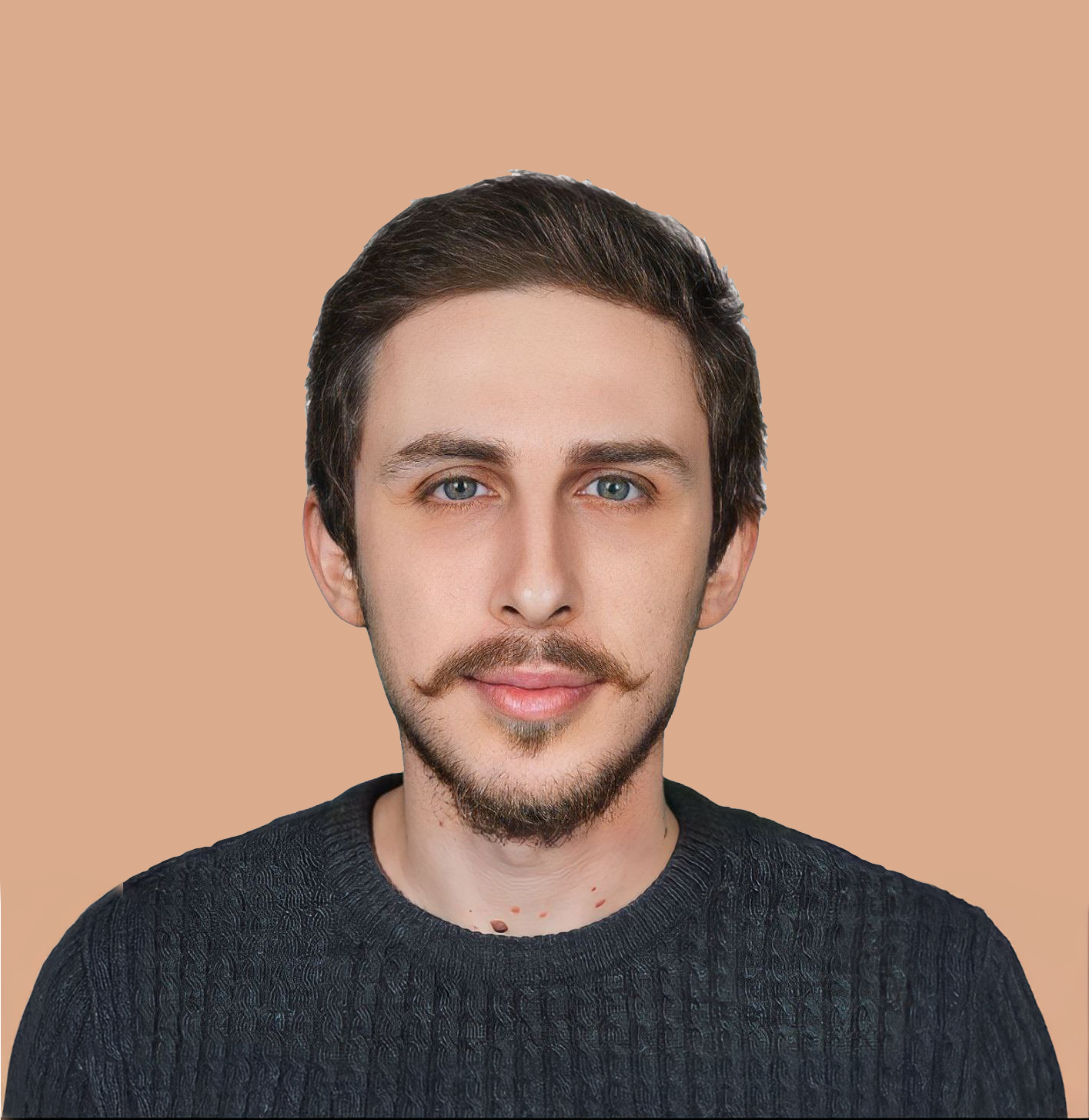
From freelance pitch decks to a $20K monthly budget across three verticals.
My marketing career started during my doctorate. I needed to fund the academic work, picked up a few freelance clients, and discovered something I didn’t expect: the same epistemic discipline that made me good at writing a dissertation made me good at running campaigns. Both require turning vague claims into testable ones. Both reward designing experiments that can fail. Both punish the same intellectual shortcuts.
The first two years were independent: eight clients across e-commerce, SaaS, and local services in Türkiye and abroad, $120K+ in annual paid media, an average 3.4× ROAS. The work was good. The lesson was structural: I learned that most marketing budgets are running on folklore, and the people who manage them can’t always tell you why a tactic should work , they can only tell you it worked last quarter.
In early 2023 I joined Oba Games to launch Hakan’s War Manager on Steam. Indie gaming forced me to think differently. Paid budgets were minimal; the entire acquisition engine had to be earned. We scaled wishlists from under 500 to over 22,000 before Early Access through creator partnerships, Steam Next Fest positioning, multilingual store optimization, and an organic short-form content engine that pulled in 1.2M+ views across TikTok and YouTube Shorts. Storefront conversion lifted from 8.2% to 14.6%. The numbers I’m proudest of weren’t the wishlists , they were the ones that proved the lift was repeatable.
Through 2024 I moved into B2B SaaS at Turquoise Choice, owning the full funnel for PB360.me , pickleball event and league-management software for North American clubs. First dedicated marketing hire. Built the SEO content engine from scratch (2.1K to 28K monthly organic visitors in nine months). Scaled paid from $0 to $8K/month with a 20% CAC reduction. ASO across iOS and Google Play, Klaviyo lifecycle, weekly A/B testing on landing pages and email. The pattern repeated: the work that compounded was always the work that produced evidence I could re-use.
Since June 2025 I’ve been at INFINIA Mühendislik, where I now run three verticals , B2G defense systems (Targon), marine subscriptions (Marisonia), and a third internal vertical, with offices in Ankara, Istanbul, Amsterdam, Manchester, and Doha. The Targon programme is the most demanding work I’ve done: account-based marketing against ~80 named naval procurement offices across NATO and MENA, producing 320+ MQLs at ~$42 CPL with a 38% SQL handoff in a market most performance playbooks don’t apply to.
The verticals look unrelated. The discipline underneath isn’t.
A PhD in Critical Thinking, applied to marketing budgets.
The doctorate isn’t the credential I lead with because the title sounds impressive. I lead with it because the training is the thing.
Critical thinking, as an academic discipline, teaches you three skills. First, how to turn a vague claim into a testable one. Second, how to design the smallest experiment that could prove the claim wrong. Third, how to revise your position when the evidence comes back.
That’s the same job as a marketing specialist with a budget. The campaign brief is a claim. The KPIs are the falsification conditions. The post-mortem is the revision. Most marketing teams skip step two (designing experiments that can fail) and that’s why most marketing teams have the same arguments every quarter about the same channels.
I try not to skip it. Every campaign I run starts with a written hypothesis and a falsification condition. Before launch. In a document. Both my future self and my colleagues can hold me to it.
This is also why I’m not a fan of marketing folklore. “Tuesday at 9am is the best time to send email” is a folklore claim. “For our list, email opens are 12% higher when sent at 9am local time on Tuesdays vs. the same template at any other tested send window over Q2” is a marketing claim. The folklore version travels faster. The marketing version is the one I want on my CV.
- 01Every campaign starts with a written hypothesis and a falsification condition.
- 02Channels follow the audience. The audience never follows the channels.
- 03A small test that produces evidence beats a big launch that produces opinions.
- 04If I can’t explain a metric to a non-marketer, I don’t trust it yet.
- 05AI accelerates the work. It doesn’t replace the thinking.
The boring, specific list.
Because “full-funnel digital marketer” is a phrase that means everything and therefore nothing. Here’s what’s actually on my screen most days.
Paid acquisition
Organic & SEO
Measurement & analytics
Lifecycle & CRM
CMS & platforms
AI in the workflow
What I’m working on, reading, and thinking about right now.
Updated periodically. The Derek Sivers /now-page pattern: a snapshot of where the work and the thinking actually are, not where they were five years ago.
Working on
The Targon B2G demand-generation programme at INFINIA. Most of the brain cycles right now go to refining the buying-committee mapping , the LinkedIn ABM segmentation handoff to sales is still under-optimized at the attaché and ministerial-advisor roles, and I’m running a structured re-targeting test through Q2 to see if the handoff rate can move from 38% to 45%+.
Also: a small piece of internal infrastructure I’m calling the “hypothesis log”: a shared document where every campaign claim and falsification condition gets written down before launch and reviewed at post-mortem. Trying to make epistemic discipline a team habit, not a personal quirk.
Reading
How Brands Grow, Part 2 (Romaniuk and Sharp). Going through it slowly. The double jeopardy and mental availability work holds up; the B2B claims at the edges I’m less sure about. The book is older than the AI search transition, and I want to read it against what’s happening in zero-click discovery.
Lately also revisiting Karl Popper on falsifiability. The doctorate version of me read it as philosophy of science. The marketing version of me reads it as a tactical handbook.
Thinking about
Whether the “evidence-based marketer” position holds up in a world where AI search results don’t preserve attribution. If ChatGPT and Perplexity start mediating most discovery, the playbook for “measurable channels” needs to be re-derived from first principles. I don’t have the answer yet.
Also: how much of what marketing teams call “best practice” would survive a real replication audit. Suspicion: less than half. Project for 2026.
A few things that don’t fit on a CV.
I live in Ankara. Most of the international work runs on a slight time-zone overlap with my colleagues in Amsterdam, Manchester, and the eastern US, which I’ve come to like. The first three hours of the morning are quiet enough to do the deep work, and the back half of the day is for the calls and the campaign reviews.
When I’m not working, I read more philosophy than marketing. Partly because the marketing field’s reading list gets stale fast, partly because the most useful frameworks I’ve found for thinking about persuasion, evidence, and rhetoric came out of academic philosophy decades before they got rebranded as growth tactics. I keep a small stack of papers in a permanent reading queue.
I’m interested in good arguments more than confident ones. If you’re a colleague, a recruiter, or a peer, and you’ve read down this far, the thing I find most useful in working relationships is people who can disagree with me precisely. Vague disagreement is exhausting; specific disagreement is how I get better at the job.
See the work, or get in touch.
Five case studies across the three verticals: challenge, hypothesis, approach, results, and what would have falsified each one. Or skip ahead and start a conversation.

